Selecting the right activated carbon for water treatment is a critical decision that directly affects treatment performance, operating costs, and regulatory compliance. With multiple carbon types, raw materials, and activation methods available, making the wrong choice can lead to poor contaminant removal, premature carbon exhaustion, or unnecessary expense. SorbiTech™ provides a systematic approach to choosing the optimal activated carbon for your water treatment application.
Understanding Your Water Treatment Requirements
Before selecting an activated carbon product, you need to clearly define what you are trying to achieve. The following assessment will guide your selection:
| Selection Factor | Key Questions to Answer |
|---|---|
| Target Contaminants | Chlorine, organic compounds, pesticides, taste and odor, color, or specific industrial pollutants? |
| Water Source | Municipal supply, groundwater, surface water, or industrial process water? |
| Flow Rate | What volume of water needs treatment per hour or per day? |
| Contact Time | How much space and time is available for the carbon to work? |
| Regulatory Standards | Which discharge or drinking water standards must be met? |
| Budget Constraints | Capital investment limits vs. ongoing operating costs? |
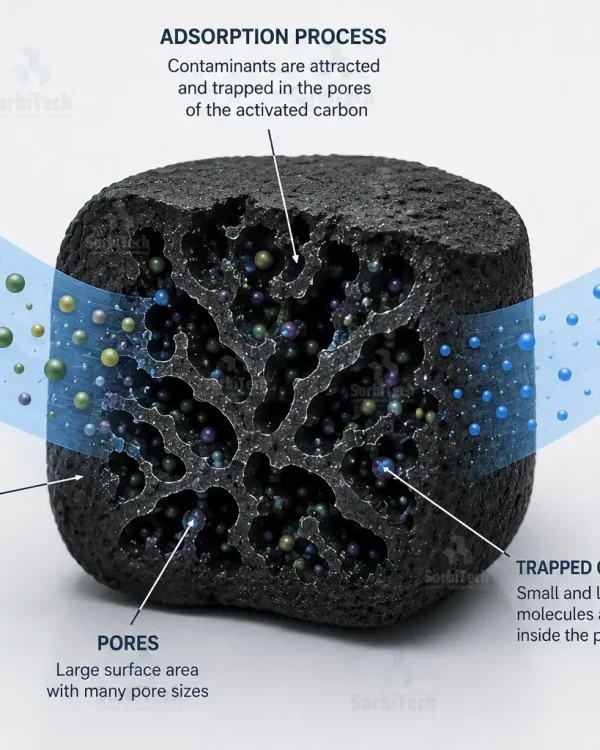
Understanding these factors helps narrow the options from hundreds of available products to a focused shortlist. Each treatment scenario has specific requirements that favour certain carbon types over others. For a detailed understanding of how the adsorption process works in water treatment & waste water treatment, see our guide on how activated carbon filtration works.
Choosing the Right Carbon Form: PAC vs GAC vs Pellets
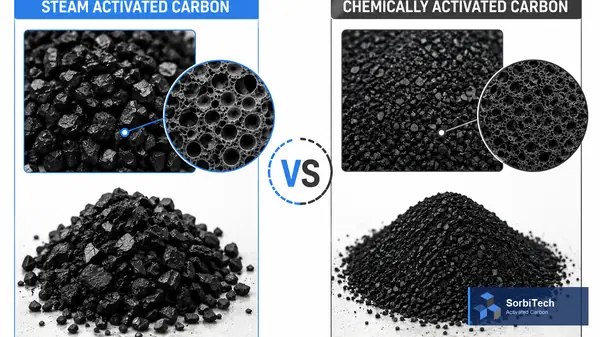
The physical form of activated carbon is the first and most important decision. Each form has distinct advantages depending on the treatment system design and operational requirements.
| Feature | PAC (Powder) | GAC (Granular) | Pellets |
|---|---|---|---|
| Particle Size | Less than 0.1 mm | 0.5 to 4.0 mm | 1.0 to 5.0 mm (cylindrical) |
| Application Method | Dosed into water stream | Fixed bed filtration | Fixed bed filtration |
| Best For | Seasonal or intermittent treatment | Continuous large scale treatment | Low pressure drop systems |
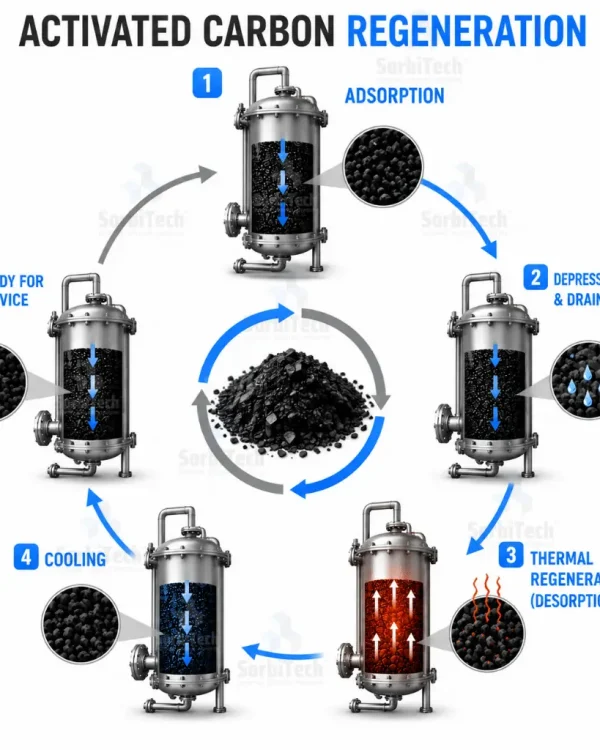
| Reactivation | Not practical | Thermally reactivated | Thermally reactivated |
| Capital Cost | Low | Medium to High | Medium to High |
| Operating Cost | Higher per volume treated | Lower per volume treated | Lower per volume treated |
Selecting the Right Raw Material
The raw material used to manufacture activated carbon significantly affects its pore structure and performance in water treatment applications.
| Raw Material | Pore Structure | Best Applications | Key Advantage |
|---|---|---|---|
| Coconut Shell | Predominantly microporous | Drinking water, dechlorination, ultrapure water | High hardness (above 97%), long service life |
| Bituminous Coal | Micro, meso, and macroporous | Wastewater, industrial process water, diverse organics | Broad pore range handles varied contaminants |
| Wood | Predominantly mesoporous and macroporous | Color removal, large molecule adsorption | Excellent for high molecular weight compounds |
Coconut Shell Based Carbon
Coconut shell carbon has a predominantly microporous structure that makes it highly effective for removing small organic molecules, chlorine, and taste and odor compounds. It is the preferred choice for:
- Drinking water dechlorination
- Point of use and point of entry water filters
- Ultrapure water production
- Desalination pre treatment (protecting RO membranes from chlorine)
Coconut shell GAC also has excellent hardness (typically above 97%), which means less fines generation during backwashing and longer service life. When choosing between coconut shell products, an iodine number above 1,000 mg/g generally indicates the best performance for drinking water treatment, delivering excellent chlorine removal and taste control.
Bituminous Coal Based Carbon
Coal based carbon has a broader pore size distribution (micropores, mesopores, and macropores) that makes it versatile for complex water treatment challenges. It is well suited for:
- Wastewater treatment with mixed organic contaminants
- Industrial process water purification
- Applications involving both small and large organic molecules
- Systems where a balance between capacity and flow characteristics is needed
Wood Based Carbon
Wood based carbon has a predominantly mesoporous and macroporous structure, making it particularly effective for removing large organic molecules and color bodies. It is commonly used in:
- Decolorisation applications
- Treatment of water containing large molecular weight organic compounds
- Applications where high capacity for bulky molecules is needed
Wood based PAC is especially effective for color removal and large molecule adsorption, making it a strong choice for specific industrial water treatment challenges that involve high molecular weight contaminants or natural organic matter levels.
Key Technical Parameters for Carbon Selection
When evaluating activated carbon products for water treatment, understanding the technical specifications helps ensure you select the right product for your needs.
| Parameter | What It Measures | Recommended Range (Water Treatment) |
|---|---|---|
| Iodine Number | Capacity to adsorb small molecules (mg/g) | Above 900 mg/g (above 1,000 preferred for drinking water) |
| BET Surface Area | Total adsorption surface (m²/g) | 800 to 1,200 m²/g |
| Particle Size (GAC) | Flow and pressure drop characteristics | 8×30 or 12×40 mesh (US Standard) |
| Hardness Number | Resistance to breakdown during backwashing | Above 90% (above 97% for coconut shell) |
| Ash Content | Purity level | Below 5% for drinking water |
| Moisture Content | Actual carbon weight per delivery | Below 5% |
Higher iodine numbers generally indicate better performance for chlorine and small organic compound removal. Lower ash content indicates higher purity, which is especially important in sensitive applications. The moisture content affects the actual carbon weight per delivery, so it directly impacts the cost per kilogram of effective carbon you receive.
Application Specific Recommendations
Based on decades of experience in water treatment, SorbiTech™ recommends the following carbon selections for common applications:
| Application | Recommended Carbon | Key Specification |
|---|---|---|
| Municipal Drinking Water | Coconut shell or coal based GAC | Iodine above 1,000 mg/g, NSF/ANSI 61 certified |
| Industrial Wastewater | Coal based GAC or PAC | Balanced pore structure for diverse organics |
| Process Water | Coconut shell GAC | High purity, low ash for boiler feed and cooling water |
| Desalination Pre Treatment | Coconut shell GAC | High hardness, low fines for RO membrane protection |
For municipal drinking water treatment, supplementary PAC dosing provides flexible additional treatment capacity during seasonal taste and odor events. In wastewater applications, consider using PAC for shock load management alongside a GAC polishing system. When budgets are limited but short term treatment is required, PAC offers a lower capital investment entry point compared to fixed bed GAC systems.
SorbiTech™ Water Treatment Solutions
SorbiTech™ Group is a trusted manufacturer and supplier of activated carbon for water treatment applications worldwide. Our product range includes:
- Granular Activated Carbon (GAC) in multiple raw materials and mesh sizes for fixed bed filtration
- Powder Activated Carbon (PAC) for batch dosing and supplementary treatment
- Pelletized Activated Carbon for low pressure drop and high strength applications
- OraPure Activated Carbon for specialized gold recovery applications (read our guide on how to choose activated carbon for gold recovery)
- Impregnated Activated Carbon for targeted contaminant removal
Our technical team provides complete support from carbon selection and testing through system design guidance. Whether you are building a new water treatment facility or upgrading an existing system, SorbiTech™ can help you choose the right carbon product for optimal performance and value. Contact us to discuss your water treatment requirements with our engineers.