Activated carbon filtration is one of the most widely adopted methods for removing organic contaminants, chlorine, taste, and odor from water and air. Whether used in municipal drinking water plants or complex industrial processes, activated carbon filters provide reliable treatment with predictable performance characteristics. This guide covers how the filtration process works, the different system designs available, and how to select the right configuration for your application.
Understanding the Basics of Activated Carbon Filtration
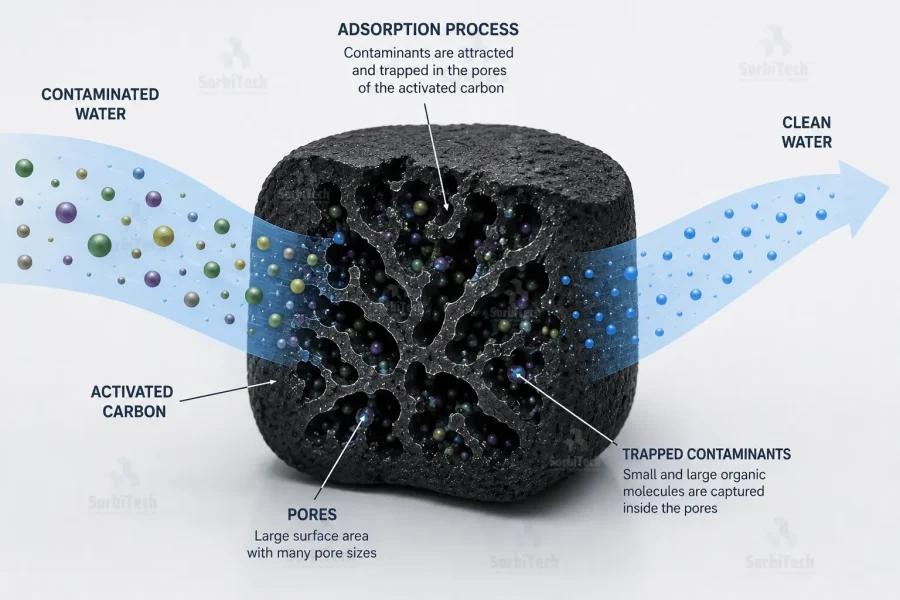
Activated carbon filtration is a treatment process where water or gas passes through a bed or dose of activated carbon. As the fluid moves through or comes in contact with the carbon, contaminants are captured on the carbon’s surface through adsorption. Unlike mechanical filtration, which physically blocks particles based on size, activated carbon filtration works at the molecular level, attracting and holding dissolved organic compounds, chlorine, and other pollutants.
This molecular level capture makes the process effective against a wide range of contaminants that conventional filters cannot address, including chlorine, pesticides, herbicides, industrial solvents, taste and odor compounds, and volatile organic compounds. For a foundational understanding of how carbon captures contaminants, read our detailed guide on what activated carbon is and how it works.
How GAC Filtration Systems Work
Granular activated carbon (GAC) filtration is the most common configuration in water and air treatment. In a typical GAC system, the carbon is packed into a fixed bed column or vessel, and the contaminated water or gas flows through the bed.
The Filtration Process Step by Step
| Stage | Process | What Happens |
|---|---|---|
| 1. Influent Entry | Water enters the filter vessel | Distributed evenly across the carbon bed surface |
| 2. Contact Zone | Water passes through the bed | Dissolved contaminants are adsorbed onto the carbon surface |
| 3. Mass Transfer Zone | Active adsorption layer | The MTZ moves downward as upper layers become saturated |
| 4. Effluent Discharge | Clean water exits | Treatment quality remains high while MTZ is within the bed |
| 5. Breakthrough | MTZ reaches bed bottom | Contaminants appear in effluent; carbon needs replacement or reactivation |
The Mass Transfer Zone (MTZ) is a critical concept in GAC filter design. Above this zone, the carbon is fully saturated. Below it, the carbon is still fresh. Monitoring the MTZ position through regular effluent sampling allows operators to predict when carbon replacement will be needed.
How PAC Dosing Works
Powder activated carbon (PAC) is used differently from GAC. Instead of a fixed bed, PAC is dosed directly into the water as a slurry. The fine particle size (typically less than 0.15 mm) provides a very large surface area relative to its mass, enabling rapid adsorption kinetics.
Common PAC Applications
- Drinking water treatment plants for seasonal taste and odor control
- Wastewater treatment facilities for removing trace organic compounds
- Sugar decolorization and edible oil refining processes
- Pharmaceutical purification for API processing
After the contact period, the spent PAC is removed through sedimentation, filtration, or centrifugation. PAC is typically used on a single pass basis and not reactivated, though it can be effective even in small doses when rapid response to changing water quality is needed.
Gas Phase Activated Carbon Filtration
Activated carbon filtration is equally effective in gas phase applications. In these systems, contaminated air or gas passes through a bed of pelletized or granular activated carbon.
Gas Phase Applications and Recommended Carbon Types
| Application | Target Contaminants | Recommended Carbon |
|---|---|---|
| VOC Removal | Industrial solvents, hydrocarbons | Pelletized, GAC |
| Odor Control | H2S, mercaptans, amines | Impregnated, Pelletized |
| Biogas Purification | Siloxanes, hydrogen sulfide | Impregnated, Pelletized |
| Mercury Capture | Elemental and oxidized mercury | Impregnated carbon |
| Solvent Recovery | Recyclable organic solvents | GAC, Pelletized |
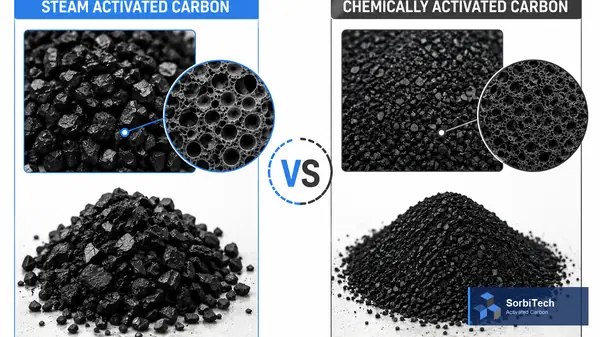
The choice between steam activated and chemically activated carbon also plays a role in gas phase performance. Steam activated carbon with its microporous structure is generally preferred for capturing small volatile molecules, while applications involving larger molecular weight compounds may benefit from chemically activated products with broader pore distributions.
Key Design Parameters for Carbon Filtration Systems
Designing an effective system requires careful attention to several engineering parameters:
Empty Bed Contact Time (EBCT)
EBCT is the theoretical time the water or gas spends in contact with the carbon bed, calculated by dividing the bed volume by the flow rate. Typical EBCT values range from 5 to 30 minutes for water treatment. A longer EBCT generally provides better removal but requires a larger carbon volume.
Flow Rate and Hydraulic Loading
The flow rate must be balanced to provide adequate contact time while maintaining reasonable pressure drop. Excessive flow rates can cause channeling, where water finds paths of least resistance through the bed, reducing treatment efficiency.
Bed Depth and Backwash Requirements
Standard bed depths for water treatment typically range from 1 to 3 meters. The bed must be deep enough to contain the full mass transfer zone with a safety margin. GAC filters also require periodic backwashing to remove accumulated suspended solids and prevent excessive pressure drop.
GAC vs PAC: Choosing the Right Approach
| Factor | GAC (Fixed Bed) | PAC (Direct Dosing) |
|---|---|---|
| Treatment Mode | Continuous, consistent loads | Intermittent, seasonal events |
| Capital Cost | Higher (vessels, piping) | Lower (minimal infrastructure) |
| Operating Cost | Lower per unit treated over time | Higher ongoing consumption |
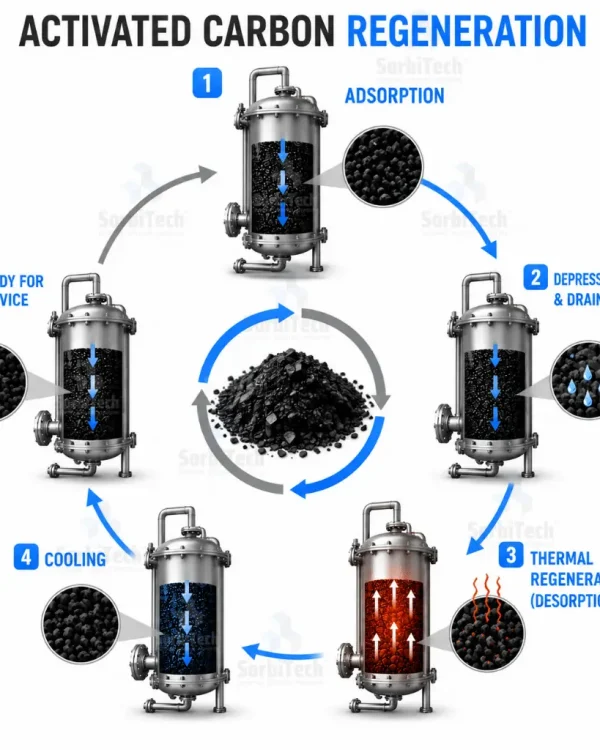
| Reactivation | Can be thermally reactivated | Single use, disposed with sludge |
| Space | Dedicated filter area needed | Integrates into existing systems |
| Response Time | Steady, predictable performance | Rapid adjustment to changing conditions |
For a detailed guide on selecting the right carbon product for water treatment applications, including matching carbon specifications to your specific process requirements, see our dedicated selection guide.
Maintaining Filtration Performance
To ensure consistent treatment results, regular monitoring is essential:
- Track effluent quality parameters to identify the approach of breakthrough
- Monitor pressure drop across the bed to detect fouling or channeling
- Conduct periodic carbon sampling and iodine number testing to assess remaining capacity
- Schedule timely replacement or reactivation before performance drops below acceptable levels
Standard activated carbon does not reliably remove bacteria or viruses. For microbiological safety, activated carbon filtration should always be combined with disinfection methods such as UV treatment or chlorination. Typical GAC filter replacement cycles range from 6 to 24 months, depending on contaminant loading and system design.
SorbiTech Filtration Products
SorbiTech manufactures a complete range of carbon products for filtration applications from the UAE. From high performance GAC for fixed bed filters to precision milled PAC for dosing systems, the products are engineered to deliver consistent adsorption performance and long service life. The range also includes OraPure carbon engineered specifically for gold recovery circuits where high hardness and fast adsorption kinetics are critical.
For product specifications, carbon selection support, or a consultation on your filtration requirements, contact SorbiTech.