Activated carbon is a functional adsorbent, and replacing it every time it reaches saturation is not always the most efficient approach. Regeneration, also known as reactivation, restores the adsorption capacity of spent carbon so it can return to service. This guide covers how the process works, the methods available, and when regeneration makes technical and economic sense.
What Is Activated Carbon Regeneration?
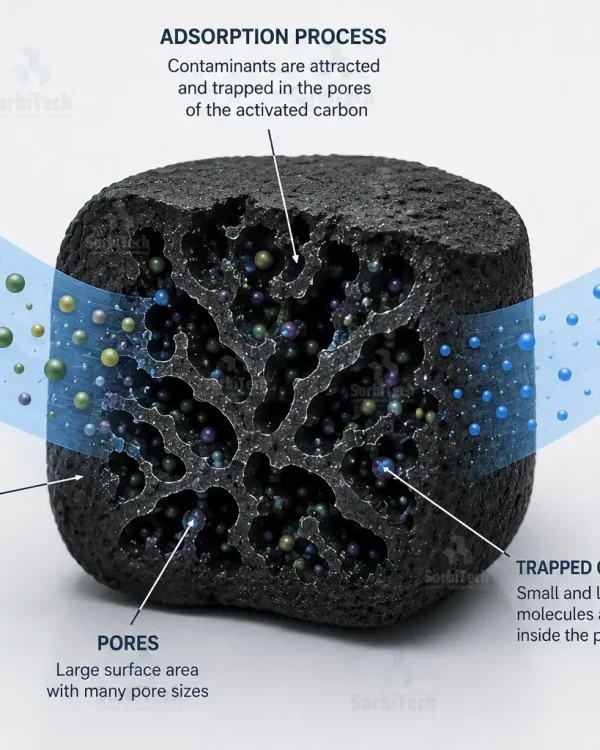
Activated carbon regeneration is the process of removing adsorbed contaminants from the pore structure of spent carbon to restore its adsorption capacity. Over time, as carbon captures organic compounds, chlorine, and other pollutants, its pores fill and the carbon loses effectiveness. Rather than disposing of this spent material, regeneration allows operators to recover a significant portion of the original adsorption capacity and return the carbon to service.
This approach is particularly relevant for operations using large volumes of granular activated carbon (GAC) and pelletized activated carbon in fixed bed filtration systems, where carbon replacement costs can be substantial. High quality GAC can typically be thermally reactivated 4 to 8 times before cumulative capacity loss makes replacement more economical.
Why Regeneration Matters
| Benefit | Impact |
|---|---|
| Cost Reduction | Reactivation costs significantly less than purchasing new virgin carbon, especially for large scale operations |
| Environmental Sustainability | Reduces waste sent to landfill and lowers demand for new raw material extraction |
| Resource Efficiency | Coconut shell GAC used in gold recovery represents a high value investment worth preserving |
| Supply Chain Stability | On site or contracted regeneration reduces dependence on new carbon supply schedules |
Thermal Reactivation: The Industry Standard
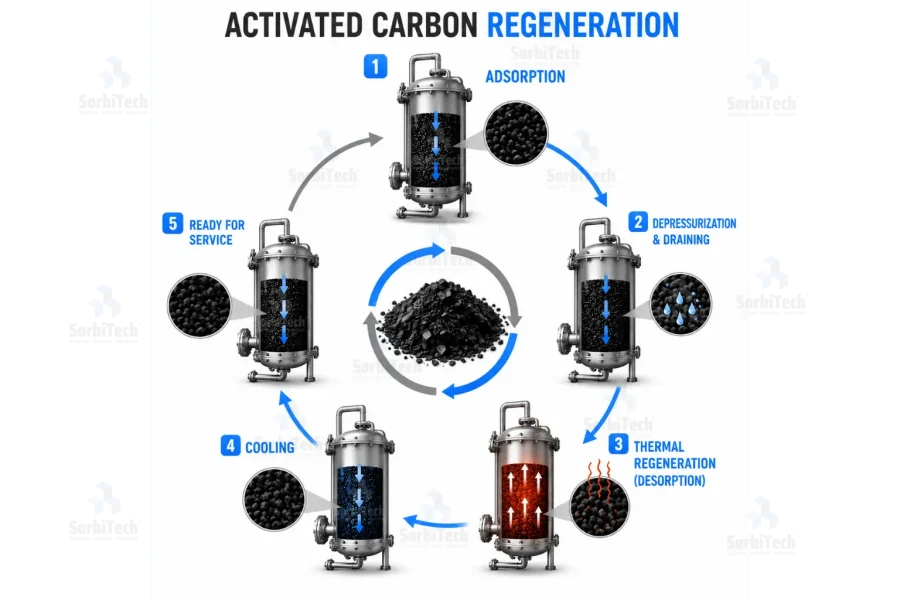
Thermal reactivation is the most widely used method for regenerating spent GAC and pelletized carbon. It uses high temperature processing to destroy adsorbed contaminants and reopen the pore structure.
Thermal Reactivation Process
| Stage | Temperature Range | What Happens |
|---|---|---|
| 1. Drying | 100°C to 200°C | Moisture is removed; prepares material for higher temperatures |
| 2. Thermal Desorption | 200°C to 500°C | Volatile organic compounds desorb from the carbon surface |
| 3. Pyrolysis | 500°C to 700°C | Heavier organics are thermally decomposed into smaller molecules |
| 4. Reactivation | 700°C to 950°C | Steam or CO2 gasifies carbonaceous residue, restoring the pore network |
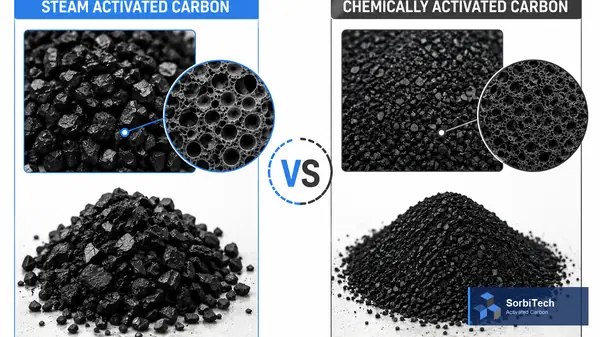
The final reactivation stage is essentially the same steam activation process used to create virgin activated carbon. For more details on how activation works, see our guide on what activated carbon is and how it works.
Equipment Used for Thermal Reactivation
- Rotary kilns: most common for large scale reactivation; rotating drum provides even heat distribution
- Multiple hearth furnaces: used in some drinking water utilities; carbon moves through heated hearths
- Fluidized bed reactors: excellent heat transfer and uniform processing for specialized facilities
A well executed thermal reactivation typically restores 90 to 95 percent of the original adsorption capacity. However, each cycle causes a small carbon mass loss (typically 5 to 10 percent) due to oxidation and attrition. Properly reactivated carbon performs at levels fully adequate for most industrial applications.
Chemical Regeneration
Chemical regeneration uses solvents, acids, bases, or oxidizing agents to desorb contaminants from the carbon surface without high temperature processing.
Chemical Regeneration Methods
| Method | Agent Used | Target Application |
|---|---|---|
| Acid Washing | Dilute HCl or H2SO4 | Removes inorganic deposits (calcium, iron, manganese) |
| Caustic Washing | Sodium hydroxide (NaOH) | Desorbs organic acids and phenolic compounds |
| Solvent Washing | Organic solvents | Recovers specific compounds in solvent recovery operations |
| Oxidative Regeneration | Hydrogen peroxide (H2O2) | Breaks down adsorbed organics in situ |
Chemical regeneration typically restores 60 to 80 percent of original capacity but can be performed on site without specialized high temperature equipment. It is best suited for applications where the adsorbed contaminants are relatively easy to desorb chemically.
Steam Regeneration
Steam regeneration is a simpler thermal method for carbon loaded with volatile or low boiling point compounds. Low pressure steam (100°C to 250°C) is passed through the carbon bed to desorb volatile contaminants. This method is commonly used in solvent recovery and VOC removal systems.
Steam regeneration can be performed in place (in the existing adsorber vessel) and is often automated as part of the treatment cycle. However, it is only effective for volatile compounds and does not restore capacity lost to heavier contaminants.
Biological Regeneration
In some wastewater treatment applications, biological activity on the carbon surface can partially regenerate the carbon. Microorganisms growing on the carbon break down adsorbed organic compounds, freeing up adsorption sites. This biological activated carbon (BAC) approach extends the service life of GAC filters in applications where biodegradable organics are the primary target.
When to Regenerate vs When to Replace
The decision to regenerate or replace spent carbon depends on several operational and economic factors:
Regeneration Is Recommended When
- Carbon volume is large (typically more than 5 tonnes) and replacement costs are high
- Adsorbed contaminants are organic compounds removable by thermal or chemical methods
- The base carbon is a high value grade with high replacement cost (such as coconut shell GAC for gold recovery)
- A reactivation facility is accessible and logistics are manageable
- Environmental regulations require proper handling of spent carbon
Replacement Is the Better Option When
- Carbon volume is small and transportation costs outweigh reactivation savings
- The carbon has been reactivated multiple times and capacity loss is significant
- Adsorbed contaminants include heavy metals or inorganics not removable by thermal reactivation
- The application requires virgin carbon for process purity reasons
- Contamination type makes the spent carbon hazardous to handle
Powder activated carbon (PAC) is generally not regenerated due to practical difficulties of handling fine particles in reactivation equipment. PAC is typically used on a single dose basis and managed as part of the treatment sludge.
SorbiTech Carbon Supply
SorbiTech supplies both virgin and reactivation grade activated carbon for industrial applications from the UAE. Our GAC and pelletized carbon products are engineered for high reactivation potential, providing more service cycles from each carbon charge. For guidance on selecting the right carbon type for water treatment or other applications, our technical team can assist with evaluation and testing.
For questions on carbon management and reactivation planning, contact SorbiTech.